


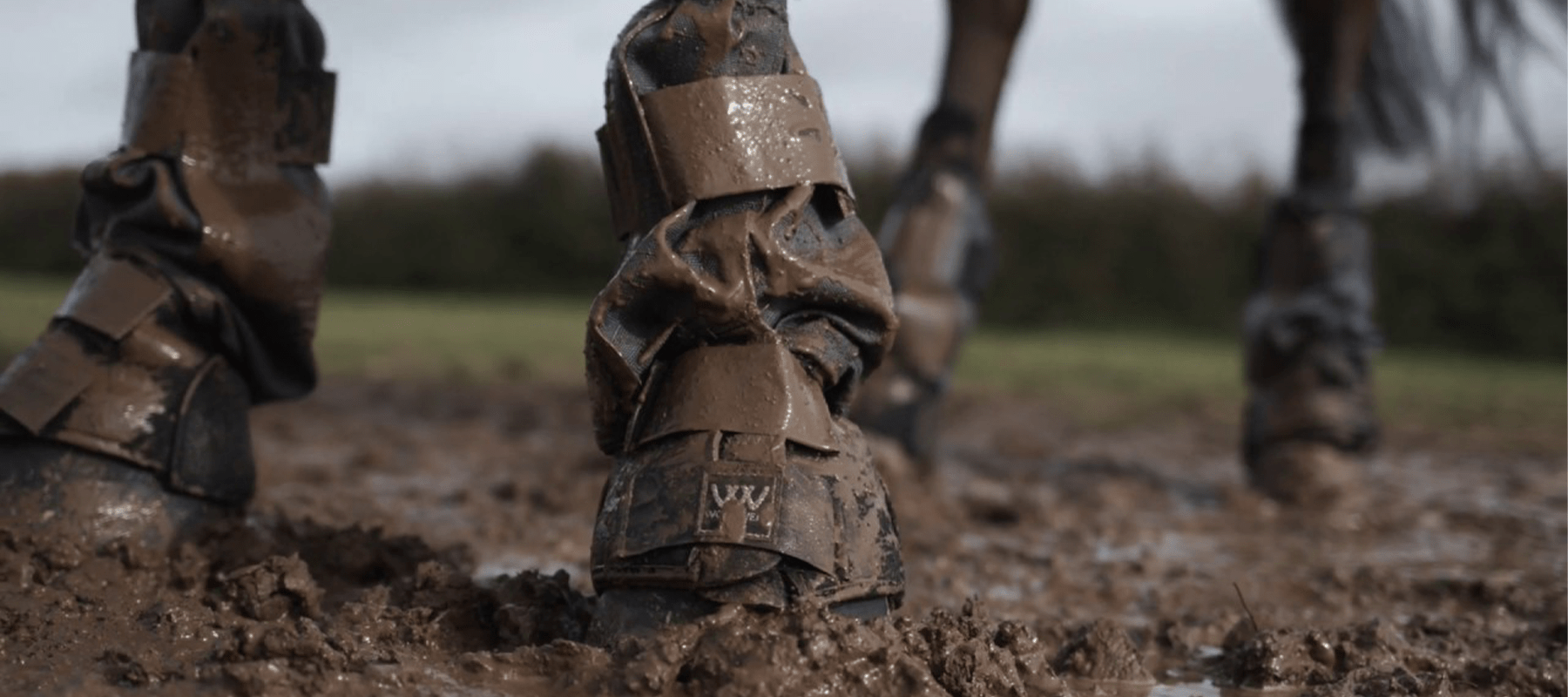
Wet weather, muddy fields, and repeated exposure to damp conditions can all increase the risk of mud fever in horses during autumn and winter. It is a common problem for many horse owners and can leave a horse’s legs sore, inflamed, and uncomfortable if not dealt with quickly.
Knowing how to spot the early signs of mud fever, how to reduce the risk, and how to manage it properly can make a big difference. Here is a straightforward guide to mud fever symptoms, prevention, and treatment.
What Is Mud Fever in Horses?
Mud fever, also known as pastern dermatitis, is a skin condition caused by bacteria that thrive in wet, muddy conditions. It often develops when the skin on the lower legs becomes weakened or damaged through constant exposure to mud and moisture, allowing bacteria to enter.
Mud fever usually affects the lower limbs, especially the heels and pastern area, and can range from mild irritation to more painful, inflamed skin.
Common Symptoms of Mud Fever
There are several clear signs that may indicate your horse has mud fever. These can include:
- matted hair on the lower legs
- crusty scabs
- heat or swelling in the affected area
- hair loss
- cracked, sore, or raw-looking skin
If your horse has never had mud fever before, or if the skin looks especially sore or severe, it is always sensible to speak to your vet for advice.
How to Help Prevent Mud Fever
Preventing mud fever is usually much easier than treating it once it has developed. Good field management can help reduce risk where possible, especially around gateways, water troughs, and heavily used muddy areas.
If you are able to, rotating grazing and reducing deep mud can help, although this is not always realistic in winter. In especially wet areas, some owners use bedding, straw, or other ground cover to help reduce prolonged exposure to thick mud.
Regularly checking your horse’s legs after turnout is also important. Spotting irritation early can help you act before mud fever becomes more serious.
Keep Legs as Dry as Possible
One of the biggest factors in mud fever is prolonged dampness. If your horse comes in with muddy legs, it is often better to let the mud dry and then brush it off gently, rather than repeatedly washing the legs.
Frequent washing can leave the skin damp for longer and may make conditions more favourable for bacteria, especially if the legs are not dried thoroughly afterwards.
Use a Barrier Product
Many horse owners like to use a barrier cream or protective oil on the legs before turnout to help reduce contact between mud and the skin. The aim is to create a protective layer that helps stop moisture and bacteria from getting into vulnerable skin.
Different horses suit different products, so it can be worth trying a few options to see what works best for your horse’s skin and turnout conditions.
Treating Mud Fever
If your horse does develop mud fever, early treatment is important. Mild cases can often be managed successfully with careful cleaning, protection, and close monitoring, but more severe cases may need veterinary advice.
Treatment usually focuses on:
- gently cleaning the affected area
- softening and removing loose scabs where appropriate
- keeping the skin as clean and dry as possible
- applying a suitable antibacterial or barrier product
- reducing exposure to wet, muddy conditions while the skin heals
It is important to be gentle, especially if the area is sore. Never force off scabs that are firmly attached, as this can make the skin more painful and inflamed.
Drying the Legs Properly Matters
After cleaning, it is essential to make sure the legs are dried thoroughly before applying any cream or barrier product. Leaving moisture trapped against the skin can slow healing and make the problem worse.
Clean, dry conditions are key when trying to get on top of mud fever.
When to Keep a Horse In
If your horse’s legs are very sore, inflamed, or actively infected, a short period away from wet and muddy turnout may help you get the condition under control more quickly. Access to a dry stable or clean standing area can make treatment easier and help prevent further irritation while the skin heals.
This will not always be necessary for every case, but it can be very helpful when mud fever is more advanced.
Mud Fever Boots and Turnout Protection
Some horses benefit from using mud fever boots or turnout boots designed to help keep the lower legs cleaner and drier in muddy conditions. These can be especially useful for horses that are prone to recurring mud fever during the wetter months.
At Equiflair, we offer practical turnout solutions such as mud fever boots designed to help protect the lower legs while remaining breathable and comfortable for turnout.
Why Early Action Matters
The earlier you spot mud fever, the easier it is usually to manage. Small scabs and minor irritation can often be dealt with before they turn into deeper, more painful skin problems.
Checking your horse’s legs regularly, especially during wet weather, is one of the best things you can do to stay on top of it.
Shop Mud Fever Care and Turnout Essentials at Equiflair
If you are preparing for wet weather or managing a horse prone to mud fever, Equiflair offers a range of practical horse care products, turnout accessories, and mud fever boots to help support your horse through the muddy months.
Explore the latest horse care essentials at Equiflair and help keep your horse’s legs protected, comfortable, and ready for winter turnout.
Share:
Best Winter Riding Coats for Horse Riders
Best Winter Boots for Horse Riders